A grounded exploration of ongoing connection after loss — and how to integrate it without fear, distortion, or isolation.
Grounded in modern grief research and over twenty-five years of lived clinical and experiential work.
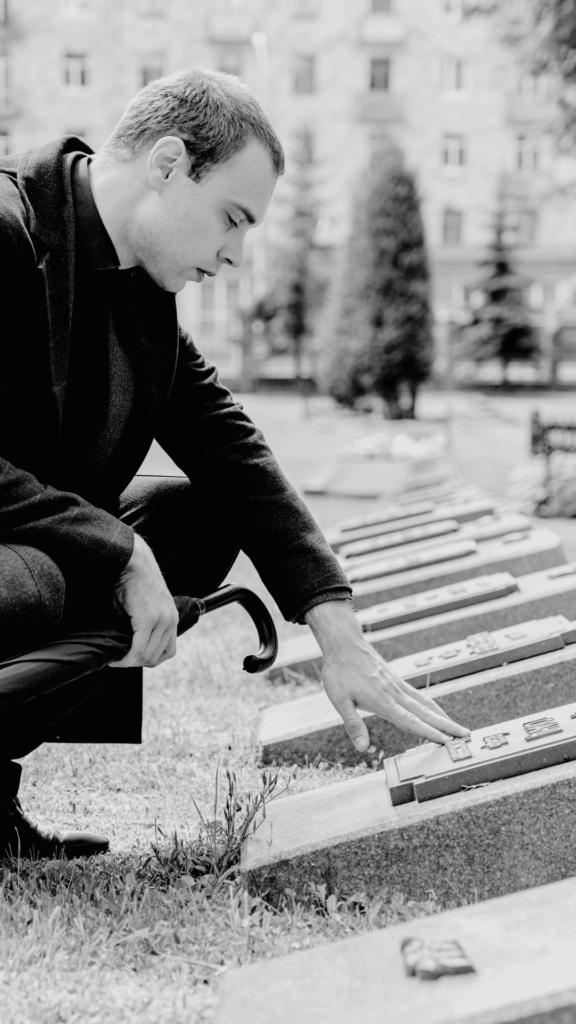
There is a moment many grieving people never speak about.
It may come in the silence of an empty room. In a dream that feels unusually vivid. In the instinct to say something aloud — not because you have forgotten the death, but because the relationship does not feel finished.
Then comes the second moment:
Is this normal?
For decades, grief was framed as a process of letting go. Healing was often described as detachment, closure, or moving on. Yet lived experience rarely unfolds that way.
In over twenty-five years of working with individuals navigating profound loss, I have rarely encountered someone who truly “detaches.” What I see instead is transformation. The relationship does not disappear. It reorganizes.
This is where the concept of continuing bonds becomes essential.
Continuing bonds refer to the ongoing internal relationship individuals maintain with someone who has died.
The term emerged in grief research in the 1990s through the work of Dennis Klass, Phyllis Silverman, and Steven Nickman. Their research challenged the long-standing belief that healthy grieving required emotional detachment from the deceased.
Instead, they observed something consistent:
People adapt by restructuring the relationship — not erasing it.
Continuing bonds may include:
Internal dialogue with the deceased
Feeling guided by their values
Vivid dreams that feel relational
Sensing presence during significant moments
Making life decisions with their influence in mind
This is not denial. It is relational continuity.
Modern grief psychology increasingly recognizes that adaptation does not require detachment — it requires integration.
Healthy Continuing Bonds
The relationship becomes internal and stabilizing
Memories provide strength rather than paralysis
Emotional intensity softens over time
The individual re-engages with life
The bond evolves into guidance rather than dependency
Unintegrated Attachment Patterns
Obsessive attempts to recreate physical presence
Refusal to acknowledge the death
Withdrawal from living relationships
Dependency on reassurance or “signs”
Inability to function independently
The difference is not whether the bond exists.
The difference is whether it supports adaptation or prevents it.
Many individuals who search for continuing bonds are not only asking about memory. They are asking about true lived experience.
They may report:
These experiences can feel both comforting and destabilizing.
Are they psychological? Spiritual? Neurological? Symbolic?
In practice, the category matters less than the integration.
What destabilizes individuals is rarely the experience itself. It is the absence of context.
Without grounding, people either dismiss the experience entirely or over-interpret it. Both extremes create instability.
Continuing bonds provide a middle path — one that allows meaning without sensationalism, and reflection without denial.
Grief is not only emotional pain. It is identity disruption.
When someone central to your life dies, your assumptions about permanence, time, and self shift. For some, this produces a profound rupture in worldview — what psychology sometimes refers to as ontological shock.
Questions arise:
These are not superficial questions. They require containment and time.
Grief does not resolve in weeks. Identity reconstruction unfolds in stages.
Continuing bonds mature gradually. In early grief, they may feel overwhelming. With integration, they become stabilizing.

Integration is not automatic.
It requires:
Reflection
Emotional processing
Identity reconstruction
Deliberate meaning-making
Time
For individuals seeking structured guidance through grief integration and continuing bonds development, the twelve-month Between Worlds journey provides a contained framework for this work.
Admission is offered on a limited basis to preserve depth and safety within the container.
Continuing bonds refer to the ongoing internal relationship maintained with someone who has died. Rather than detaching entirely, the relationship is restructured and integrated into one’s identity.
In many cases, internal dialogue can be part of healthy adaptation, provided it does not interfere with functioning or replace engagement with the living world.
Many grieving individuals report experiences they interpret as signs. The key question is whether those experiences support stability and integration.
Healthy bonds do not delay adaptation. Unintegrated attachment patterns can. The distinction lies in whether the bond supports engagement with life.
Grief-related sensory experiences are well documented. Interpretation varies across belief systems. Integration and stability are more important than immediate categorization.
Continuing bonds often evolve over a lifetime. Over time, they typically shift from acute intensity to steady internal presence.
Continuing bonds are not about refusing reality.
They are about recognizing that relationships shape identity — and identity does not vanish when someone dies.
The relationship transforms. The task is not detachment. The task is integration.